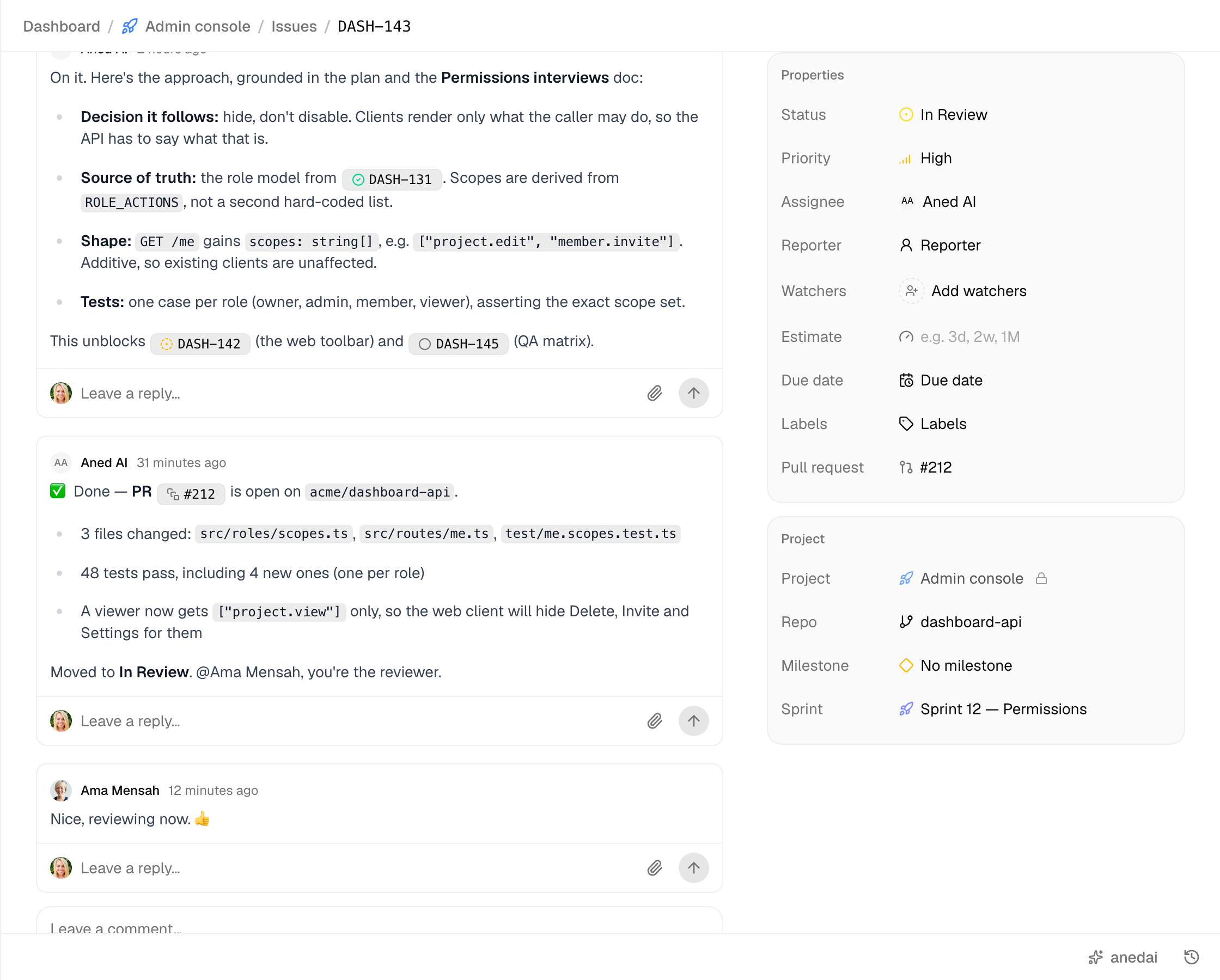
@anedai takes the ticket
It reads the plan, writes the change, runs the tests and opens the PR.
For developers
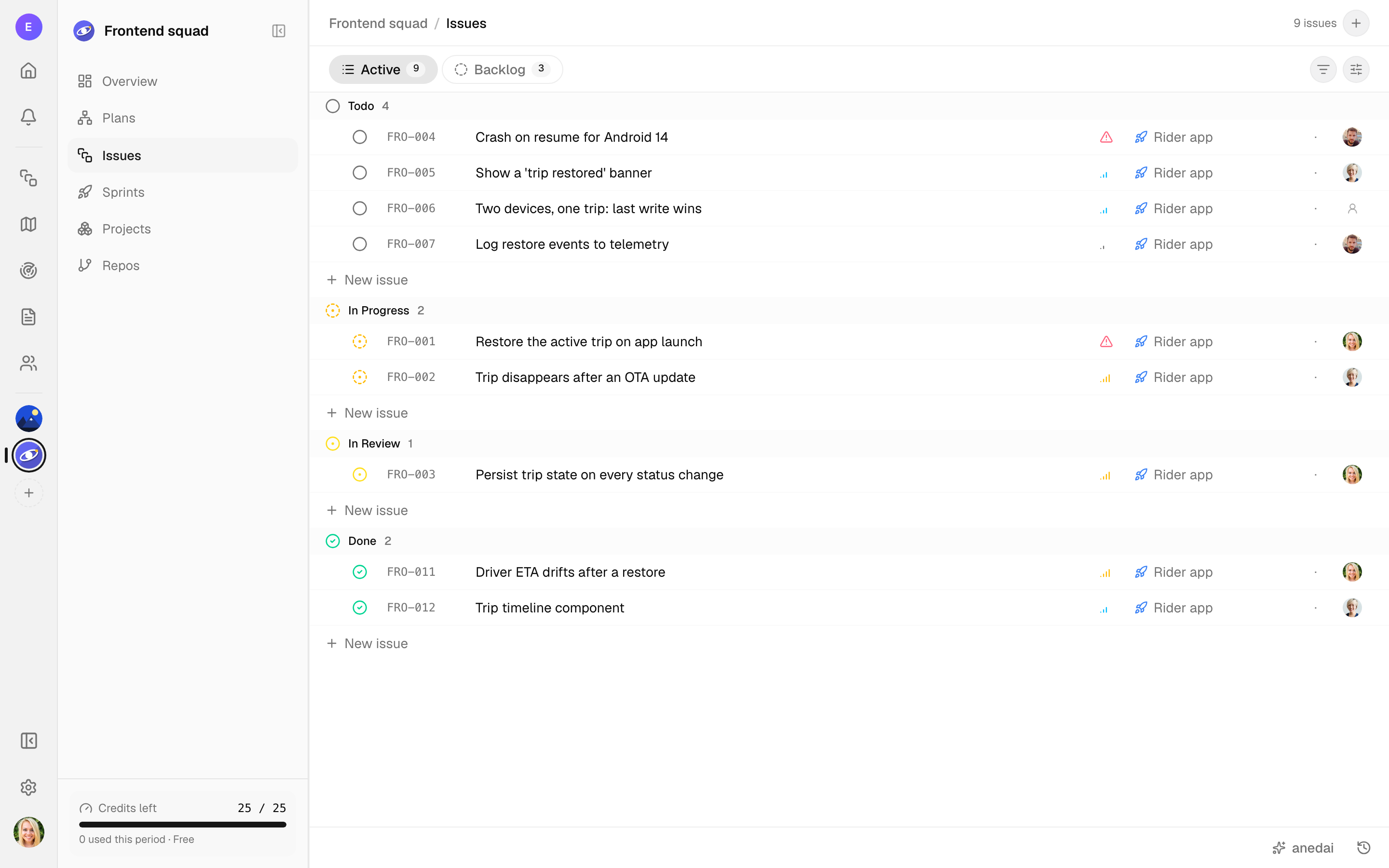
Pick up issues that carry their full context (requirements, design decisions and dependencies) and hand the grunt work to @anedai while you focus on the architecture and logic that needs a human.
What changes
01
Every issue links up to the capability, contract and intent it serves. No more digging through Slack threads or outdated PRDs to understand why a change matters.
02
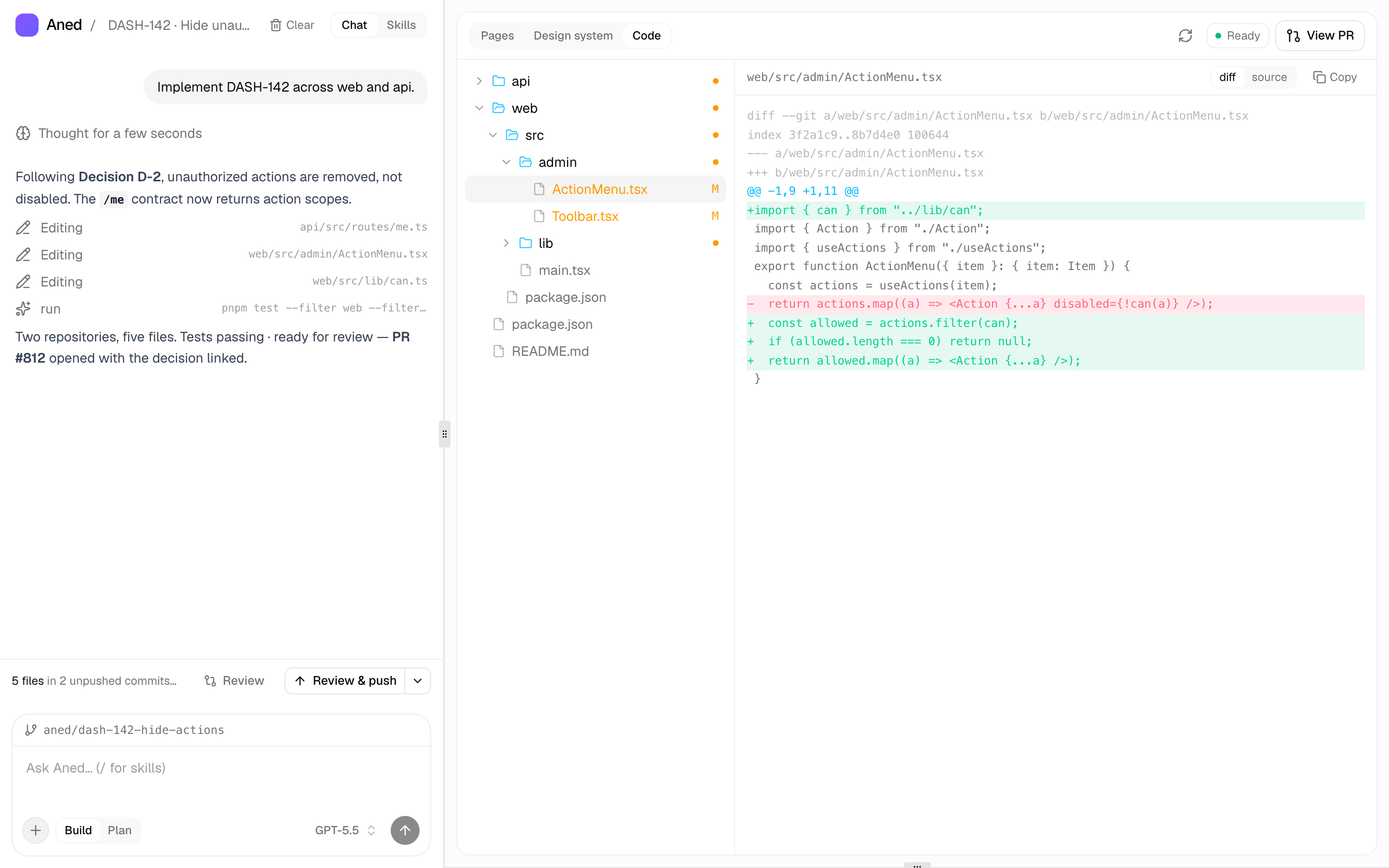
Assign boilerplate, CRUD endpoints, data-layer contracts and test scaffolding to the agent. It builds in a sandbox, runs tests, and opens a PR you can review, so you stay in flow on the hard parts.
03
Every PR from @anedai arrives with its trace: which intent, capability and issue prompted it. Diffs are scoped, tests are green, and the reason for every change is visible from the PR description.
In the product
It reads the plan, writes the change, runs the tests and opens the PR.
The decision, the signal and the contract are one click away.
Ask AnedAI
The questions developers ask every week. Today each one is a hunt across tools. In AnedAI it is one question, with the sources attached.
Without AnedAI
 JiraRead the ticket
 SlackSearch for context
 ConfluenceFind the spec
3 tools, and you still have to stitch the answer together.

@anedai Why does this issue exist?
anedaiAgent
DASH-142 came from 14 customer requests and Decision D-2: hide unauthorized actions, don't disable them. The contract says /me returns the caller's scopes.
One question one answer, with the sources linked.
Integrations
AnedAI doesn't ask you to move your company's knowledge into another silo. It reads what's already there and keeps the relationships.
Step 1
Connect
Link GitHub, Linear or Jira, Slack and your docs. Nothing has to move.
Step 2
Link
Review the goals, decisions and links AnedAI proposes. Accept what's true.
Step 3
Close the loop
Turn on signals from support and production so shipped work reports back.
Pick an issue from your backlog and see @anedai turn it into a reviewed PR.